Hyperpool® GT Saves Major Operator Over
$360,000
in Whole Mud Dilution Cost
FIELD REPORT 179
Delivering Higher Efficiency & Lower Costs in the Colorado DJ Basin
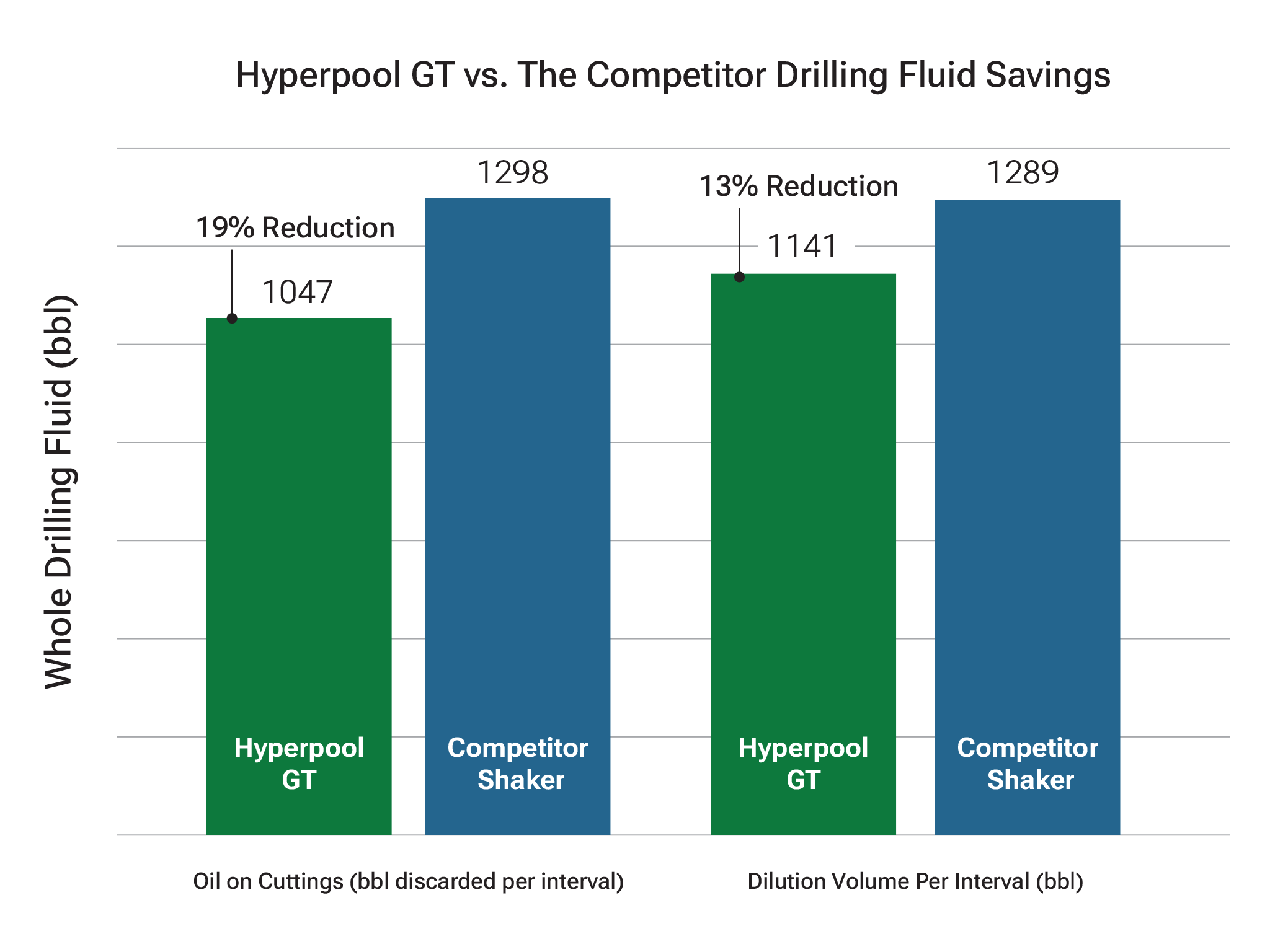
13%
Solids Removal Efficiency Increase
19%
Reduction in Retained Oil on Cuttings
50%
Reduction in Average Screen
Consumption
Per Well
$360K
In Savings Per Pad
Overview
The drilling industry’s continued demand for higher pump rates, increased ROP, and heavier mud weights brings with it the need for higher capacity and efficient fluid processing equipment. A major operator drilling in the Colorado DJ Basin initially utilizing the original Hyperpool® shakers was enticed by competitor claims and elected to trial their latest shaker. After a short period of time, the competitor’s equipment failed to perform as advertised, and the operator recognized that a change was necessary to resolve inefficiencies and cost overruns. Consequently, Derrick’s next-generation shale shaker and successor to the Hyperpool, the Hyperpool® GT, was installed to resolve these inefficiencies.
The Challenge
The evaluation encompassed an in-depth analysis of key performance benchmarks defined by the operator. The operator needed equipment that could:
- Handle higher capacity
- Deliver consistent Solids Removal Efficiency (SRE%)
- Minimize Retained Oil on Cuttings (ROC)
- Reduce screen consumption
Operational conditions for the analysis consisted of drilling 8.5” production intervals, at an approximate depth of 9,500 feet TVD, with three-mile-length laterals, deviated plus or minus 1,000 feet. The rig was drilling in the Niobrara and Codell formations.
Screen Size: API 200
ROP: 800 FT/HR
Circulating Rate: 700 – 800 GPM
Fluid Density: 10 – 11 PPG
Base Fluid Type: Paraffin Synthetic Based Fluid
Due to the previous competitor’s lower capacity and inefficient flowline equipment, the operator was unable to screen up to API 200s. Instead, the operator had to utilize API 170 screens while still losing excess fluid at a reduced drilling rate. Additionally, the operator required the competitor to repair screens to reduce consumption to at or below the advertised average amount per well. The culmination of these adverse effects resulted in higher than anticipated operational costs.
The Solution
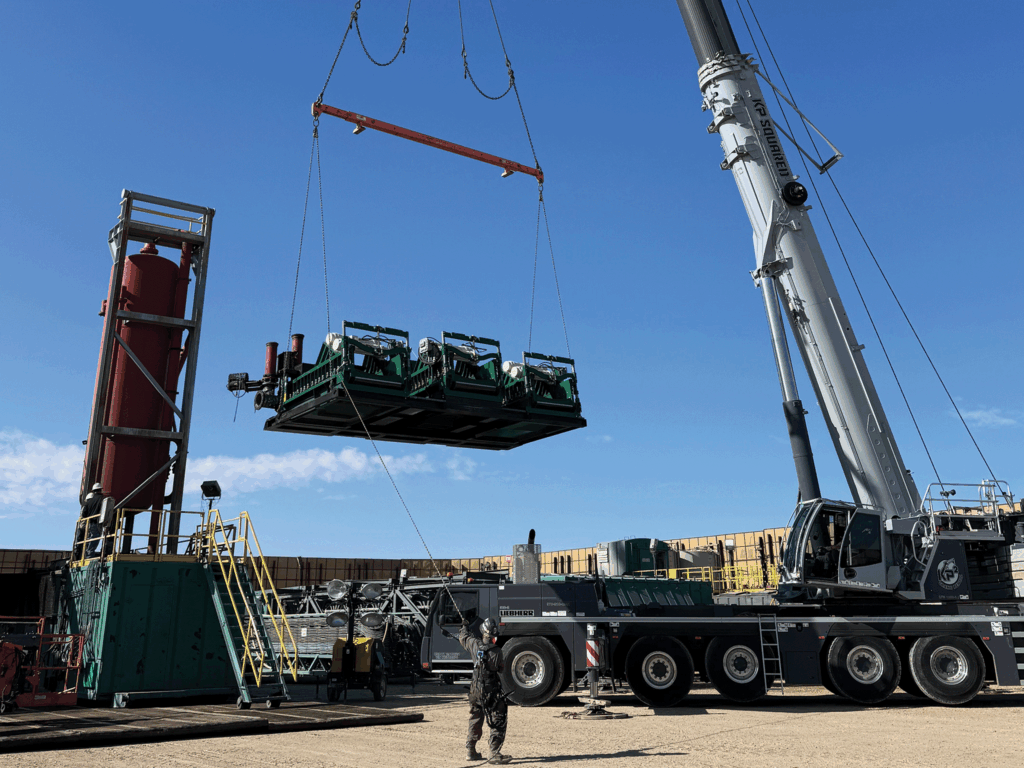
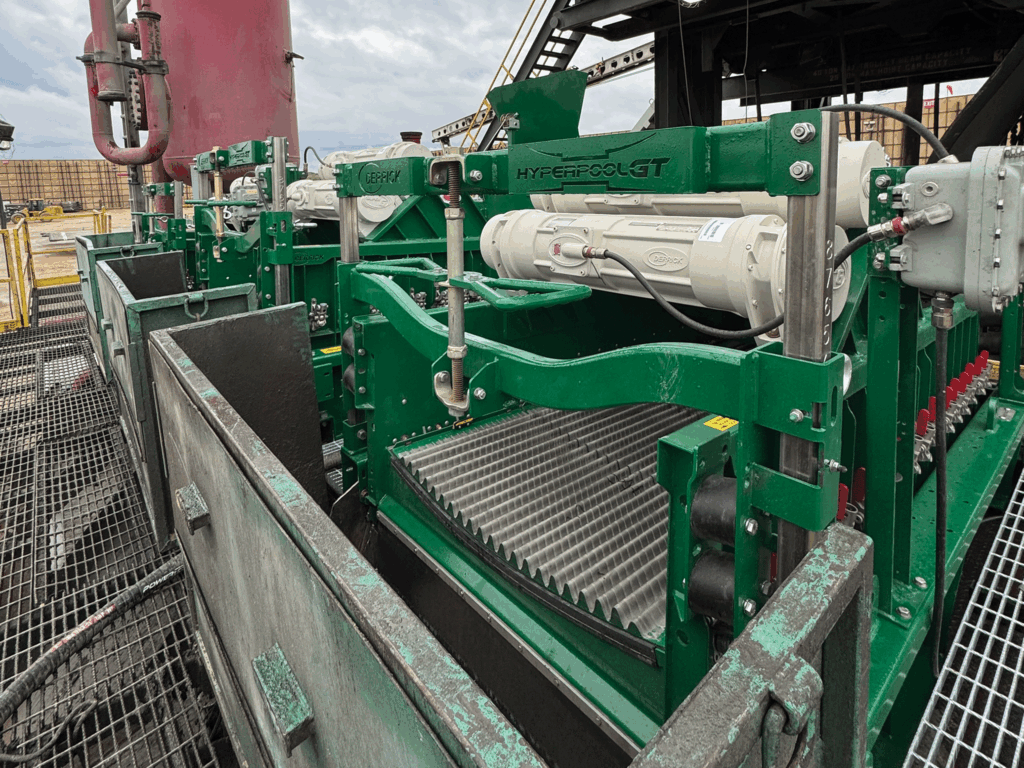
Derrick replaced the existing competitor shakers with three Hyperpool GTs, utilizing a purpose-built modular skid designed to allow the rig to completely remove the shakers during rig move operations. This design allowed for minimal changes to the existing flowline and facilitated a smooth transition during rig moves, reducing the number of crane lifts.
The Results
The Hyperpool GT, utilizing Pyramid® screen technology, achieved noticeable improvements compared to the competitor upon completion of the analysis. The capacity of the Hyperpool GT with API 200 screens enabled complete isolation of one shaker from the others during screen changes and maintenance, while maintaining a sustained circulating rate between 700 and 800 GPM, without incurring excessive mud loss. The performance of the Hyperpool GT is a stark contrast to that of the competitor’s latest shaker, which could not handle the isolation at the same flow rate and API 170 screens without overflow. Noticeable differences include:
- +13% higher SRE% than the competitors latest shaker
- -19% reduction in ROC from competitors latest shaker
- -50% reduction in average screen consumption per well, given the operating conditions
With whole mud costing approximately $250 per barrel, the increased SRE and decreased ROC in the lateral section reduced the cost per eight-well pad by more than $360,000. With measurable improvements in efficiency, capacity, and consumption, the Colorado operator decided to upgrade the competitor’s latest shaker to Hyperpool GTs.